
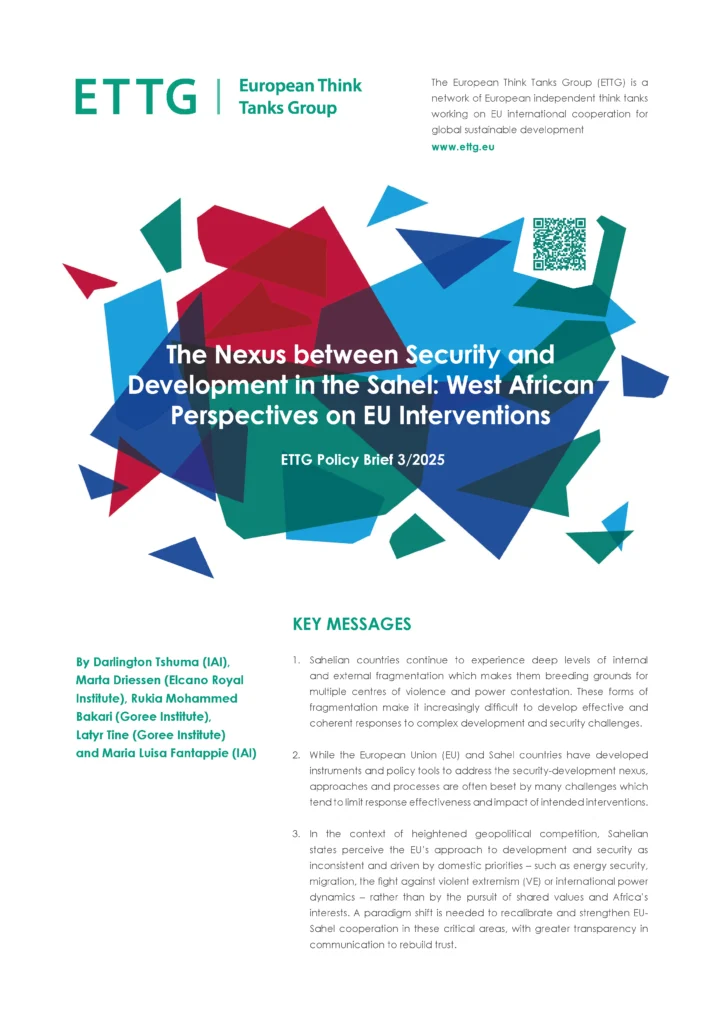
Sahelian countries continue to experience deep levels of internal and external fragmentation which makes them breeding grounds for multiple centres of violence and power contestation. These forms of fragmentation make it increasingly difficult to develop effective and coherent responses to complex development and security challenges.
While the European Union (EU) and Sahel countries have developed instruments and policy tools to address the security-development nexus, approaches and processes are often beset by many challenges which tend to limit response effectiveness and impact of intended interventions.
In the context of heightened geopolitical competition, Sahelian states perceive the EU’s approach to development and security as inconsistent and driven by domestic priorities – such as energy security, migration, the fight against violent extremism (VE) or international power dynamics – rather than by the pursuit of shared values and Africa’s interests. A paradigm shift is needed to recalibrate and strengthen EUSahel cooperation in these critical areas, with greater transparency in communication to rebuild trust.
Dans la même collection
Toute la collection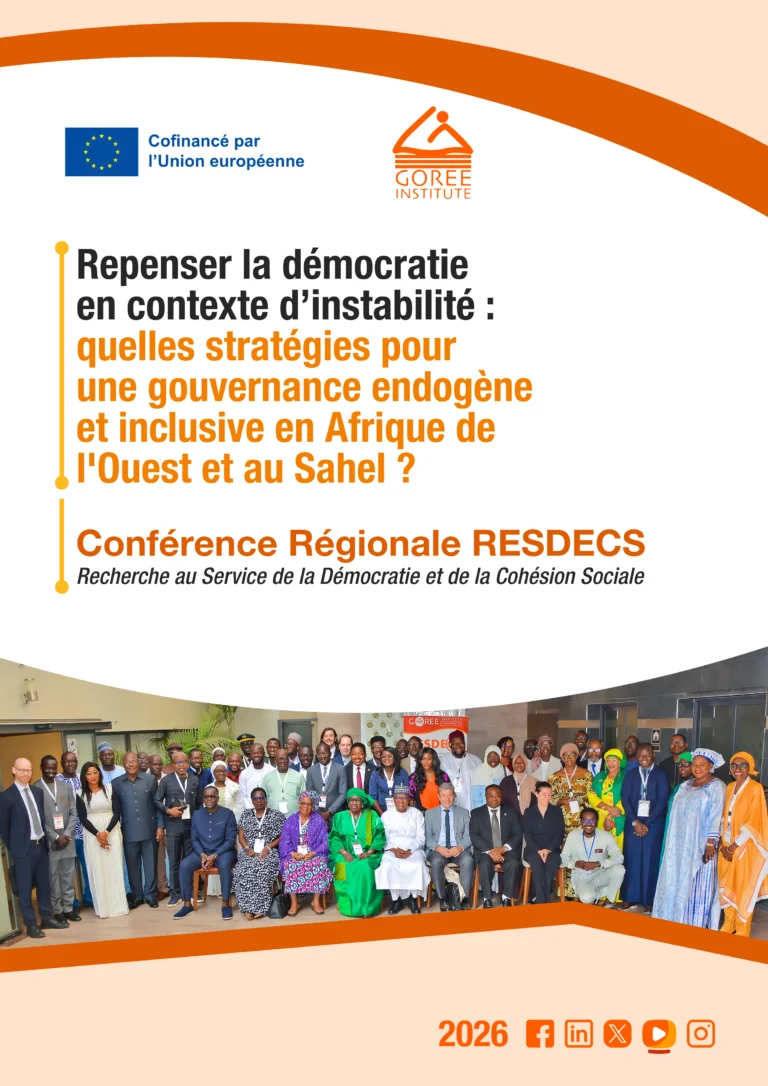
Repenser la démocratie en contexte d’instabilité : quelles stratégies pour une gouvernance endogène et inclusive en Afrique de l’Ouest et au Sahel ?
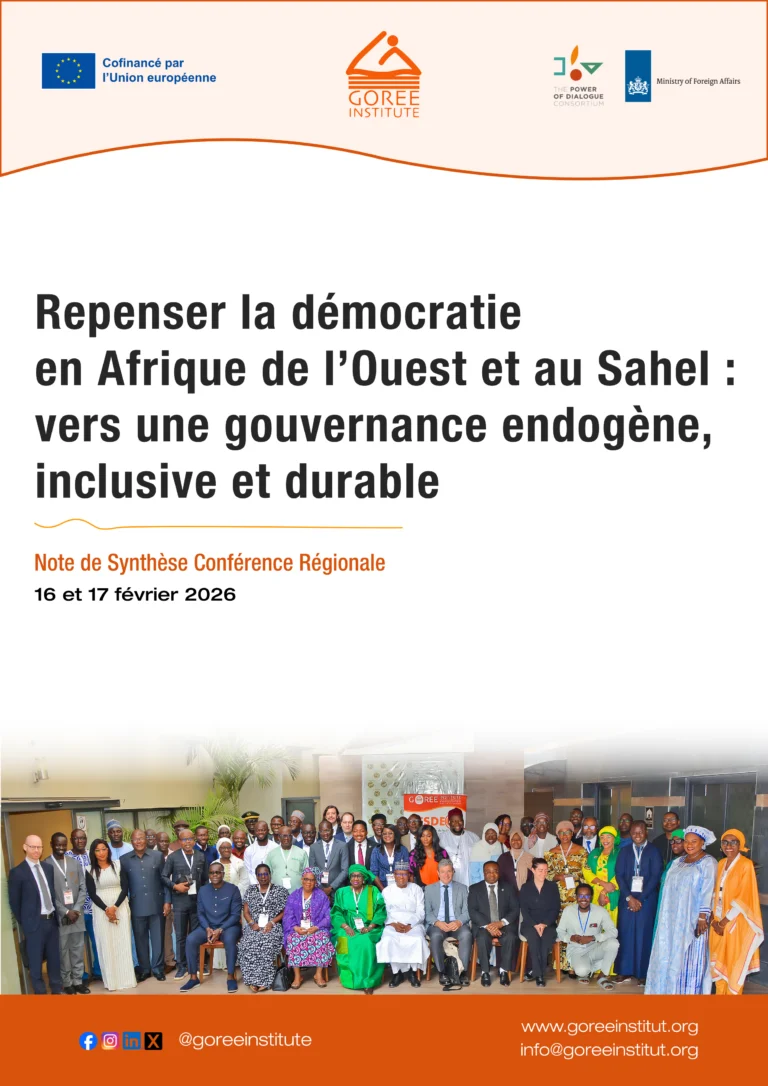
Repenser la démocratie en Afrique de l’Ouest et au Sahel : vers une gouvernance endogène, inclusive et durable
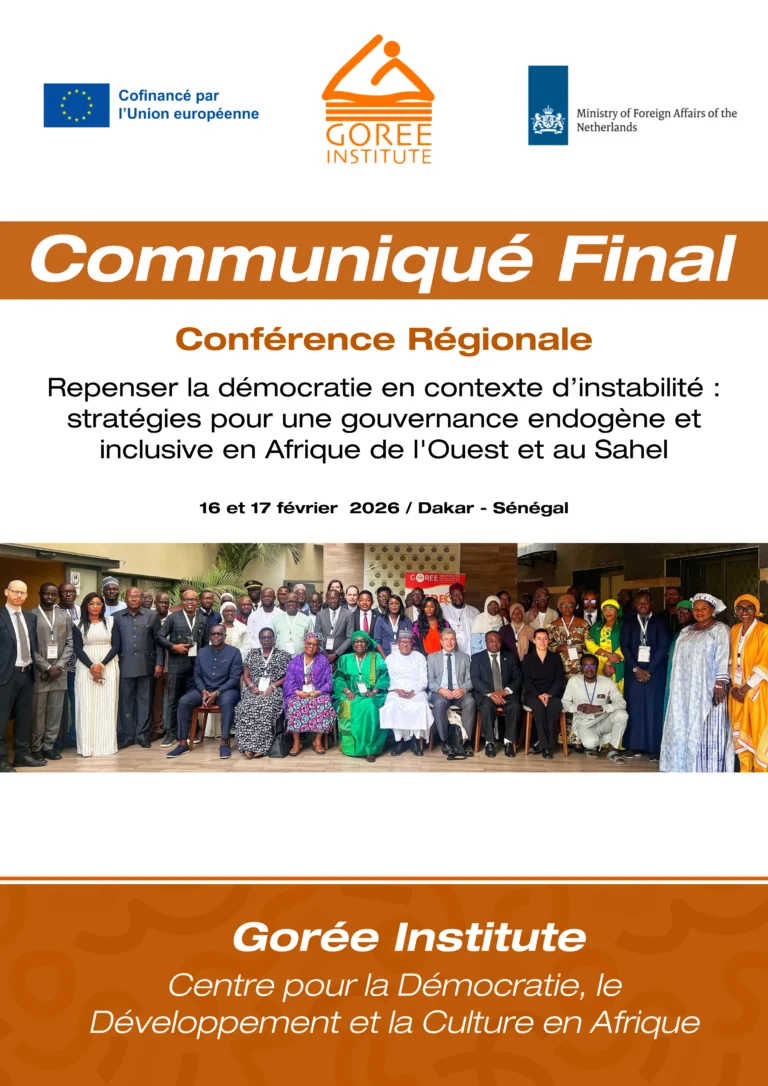
Communiqué final : Repenser la démocratie en contexte d’instabilité : stratégies pour une gouvernance endogène et inclusive en Afrique de l’Ouest et au Sahel
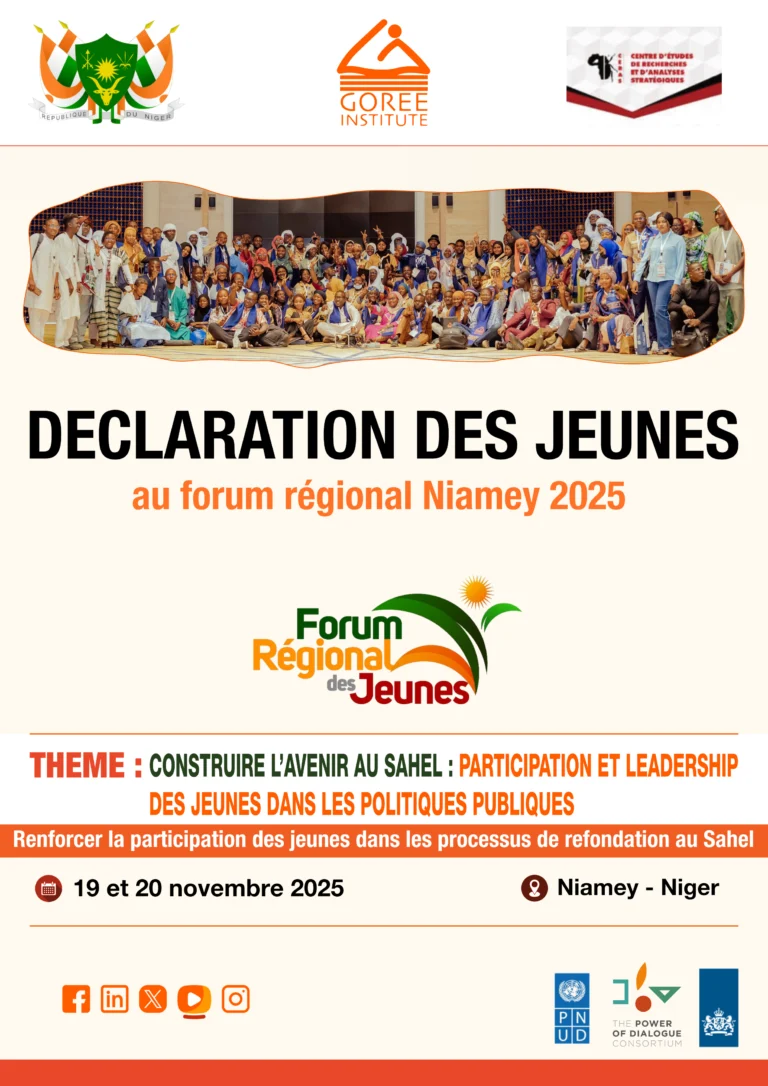
Déclaration des jeunes au forum régional de la Jeunesse | Niger – Niamey 2025